

From $500
30 to 45 minutes
A short series
Minimal
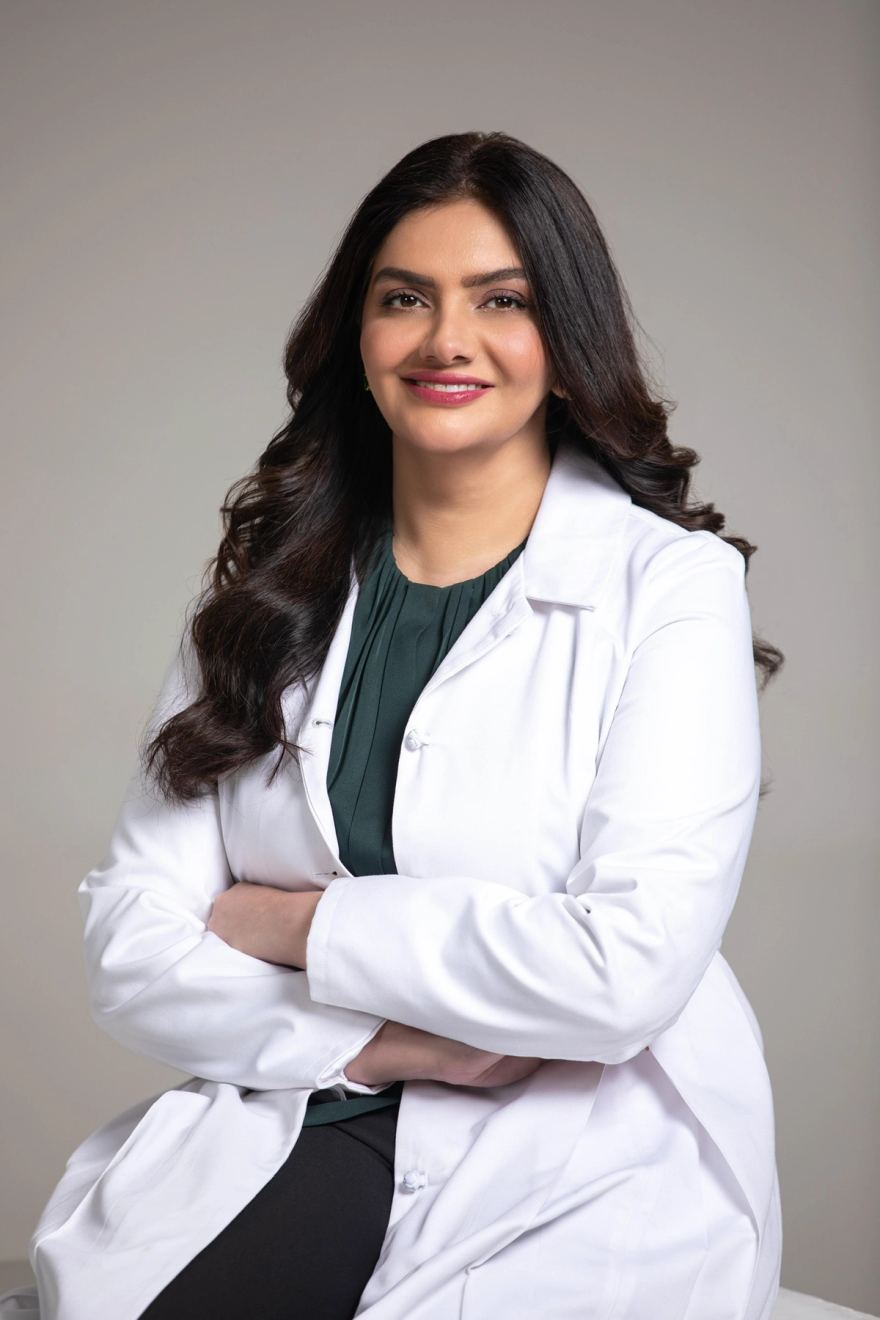
Dr. Sabeen Munib, MD
Overview
Rejuran at Spectrum
Rejuran is a polynucleotide, sometimes described as PDRN or salmon DNA. At Spectrum it is placed in the skin as a series of microinjections to support skin quality, texture and resilience. It is not a volumizing filler.
Dr. Sabeen Munib, MD performs every Rejuran treatment. Whether Rejuran fits alone or as part of a plan depends on your skin, the area of concern and your goals, which she reviews at consultation.
The Spectrum approach
Why patients choose Spectrum for Rejuran
Rejuran is a skin-quality treatment, so where it is placed and how much is used matter. Dr. Munib assesses your skin, not a fixed template, and plans placement by area and by need.
She also decides whether Rejuran is the right tool at all. For volume loss or deep folds, other treatments do more. That judgement is part of the consultation.
Every injection is performed by the physician. Rejuran is not delegated at Spectrum.
Personally performed
Skin assessed
Individual dosing
Informed consent
A real result
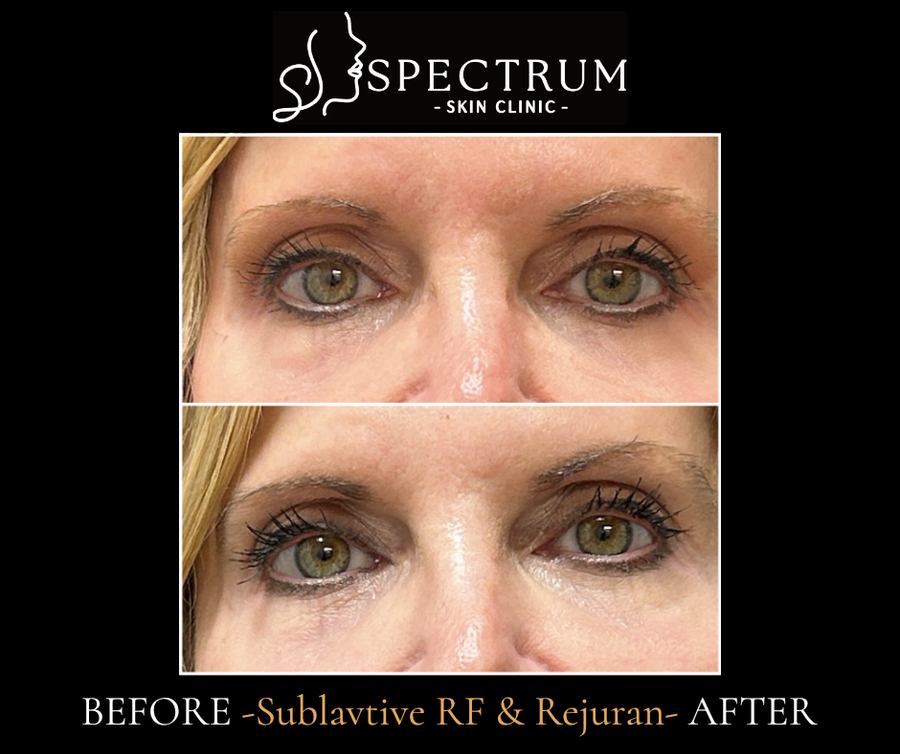
Rejuran under the eyes
Under-eye skin treated with a Rejuran polynucleotide series by Dr. Sabeen Munib, MD.
Read the skin texture and crepiness in the tear-trough area, not the amount of fill. Rejuran works on skin quality, so look at the surface, not at volume.
See All Results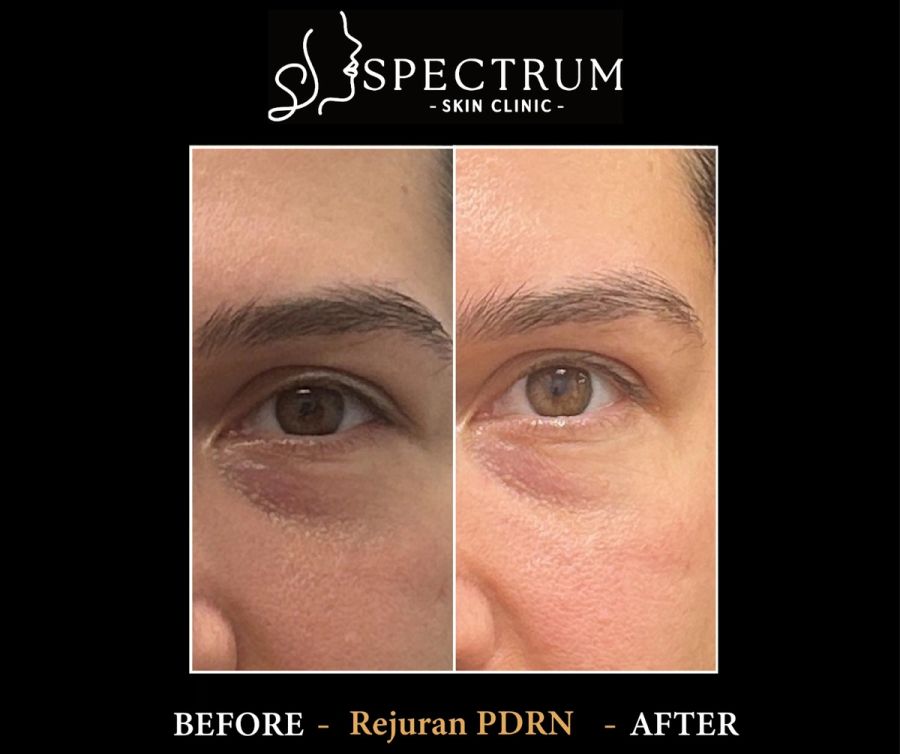
Treatment zones
Where Rejuran is treated
Rejuran is placed where thin or crepey skin needs support. The area treated sets the plan and the cost.
Under eye
Thin, crepey periorbital skin
Face
Overall texture, pores and fine lines
Neck
Crepiness and laxity of thin neck skin
Chest
Sun-related crepey texture on the decolletage
30 to 45 minutes
By area treated. Larger areas take longer.
More results
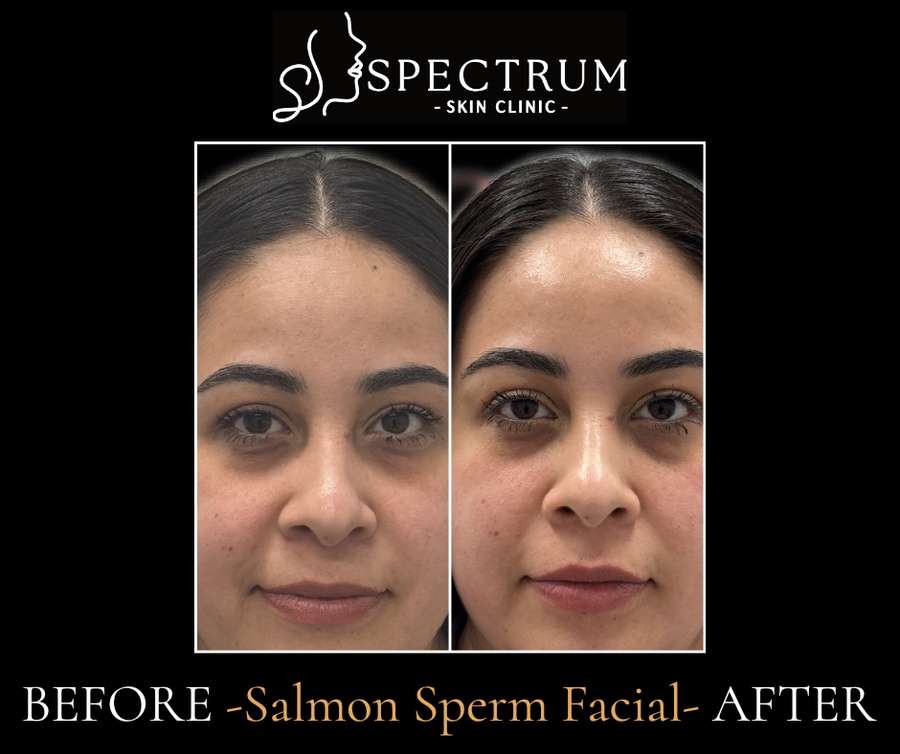
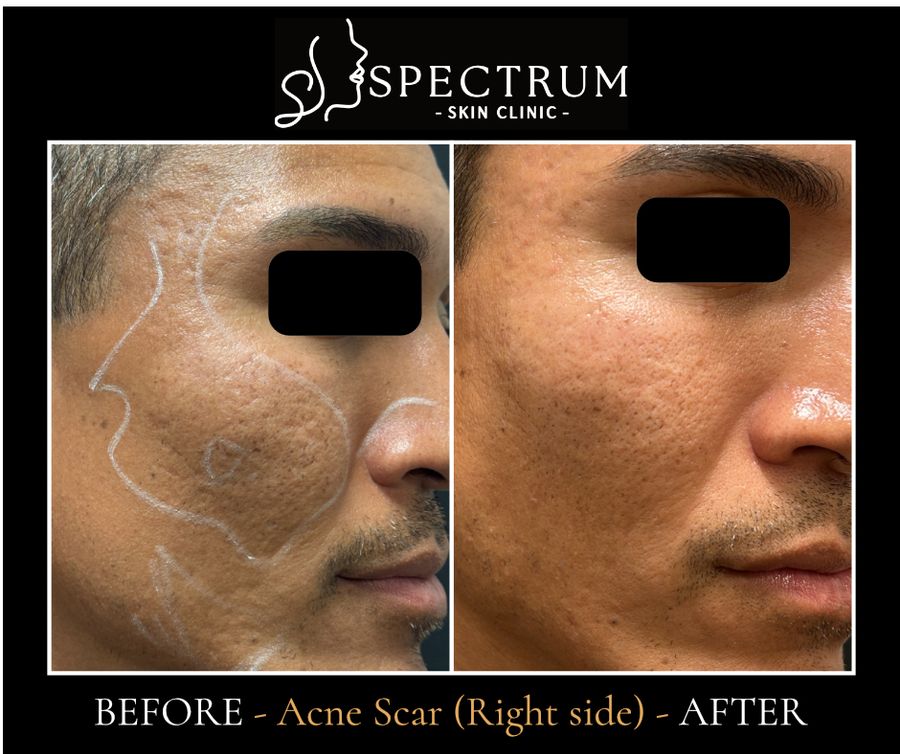
Rejuran and combination results
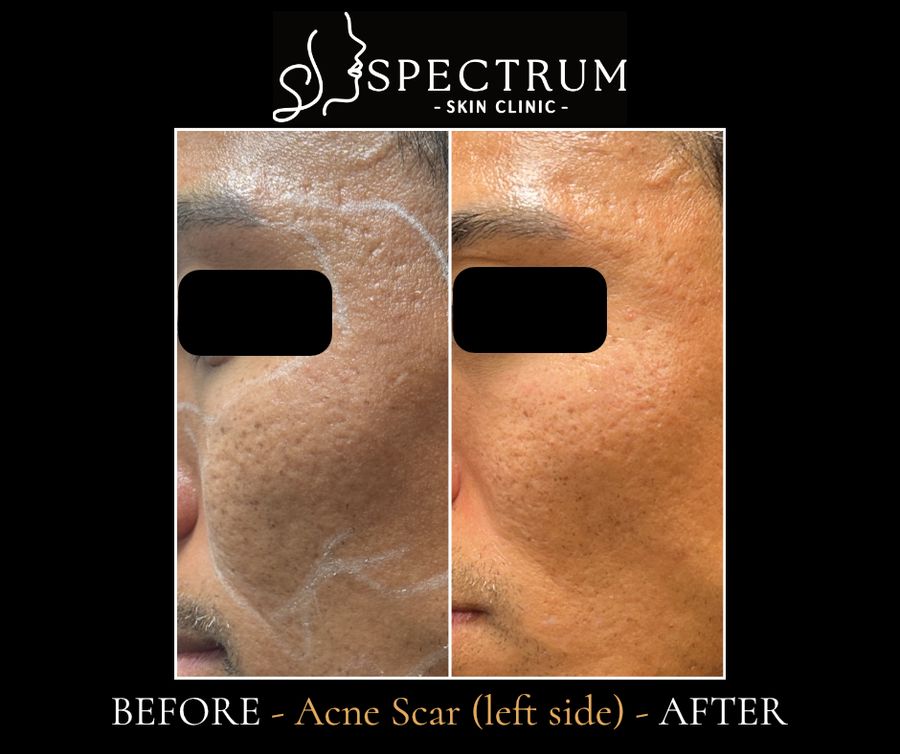
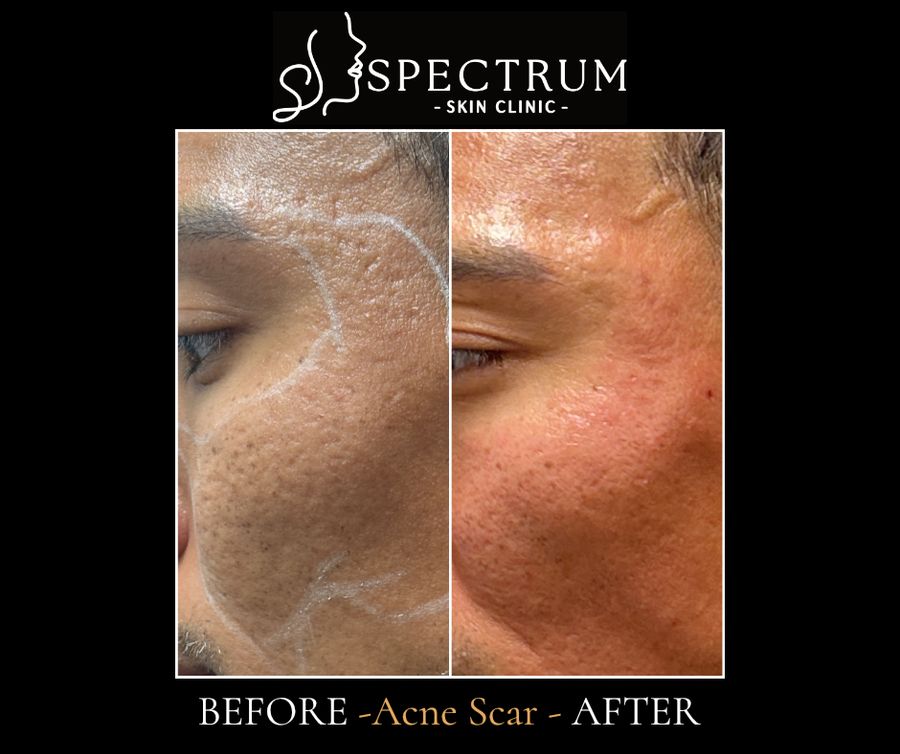
Rejuran is often one part of a plan. These cases show Rejuran on its own and alongside microneedling, subcision and resurfacing.
How Rejuran works
Polynucleotides and PDRN are DNA-derived biopolymers sourced from salmon. They act on the adenosine A2A receptor and support the skin's own nucleotide and repair pathways.
This places Rejuran in the skin-booster category, which aims at skin quality rather than volume or structural projection. It is a different tool from a volumizing filler.
Why it is a series, not a single visit
Benefit builds over repeated sessions. Studies of under-eye and periorbital use report continued improvement across sessions, which is why a short series spaced 3 to 4 weeks apart is typical.
Is this the right treatment
Rejuran, filler or resurfacing
Rejuran is right for some concerns and the wrong tool for others. Here is how it compares.
Combined approaches
What Rejuran pairs with
Candidacy
Who may be a good candidate
Rejuran suits people who want skin-quality change rather than volume. It is not for everyone, and Dr. Munib will say when another treatment fits better.
How Dr. Munib decides
She reviews your skin quality, the area of concern, your prior treatments and your goals, then decides whether Rejuran fits on its own or as part of a plan.
May be a good fit
Crepey texture, thin under-eye skin, early laxity, or skin recovering from resurfacing, in patients who want skin-quality change rather than added volume.
May not be enough on its own
Volume loss, deep static folds, or deep acne scars, where Rejuran supports but does not replace filler, biostimulation or resurfacing.
What to expect
What to expect and timeline
Rejuran builds gradually. Skin-quality change is not immediate and is best judged across the full series.
Safety
Documented risks
Reported risk profiles for polynucleotide injections are low, but any injection carries risks, which are reviewed with you.
Injection-site reactions
Swelling, redness, bruising and small bumps at the injection points are common and settle over the following days.
Bruising
More likely around the eyes and on thin skin. It resolves on its own.
Uncommon reactions
Tenderness or nodules are uncommon. Across reviewed studies, serious treatment-related events were not reported, but no procedure is risk-free.
You will review the benefits, limits and risks with Dr. Munib and give informed consent before any treatment.
How risk is kept low
Every Rejuran injection is performed by Dr. Sabeen Munib, MD. Placement, depth and volume are chosen for your skin, and your history is reviewed before treatment.
Aftercare and recovery
Cost
What affects your cost
Rejuran at Spectrum is priced by the area treated. A small area starts at $500 and the under-eye treatment is $649. Larger areas are priced by coverage: face is $850, face and neck is $1250, and face, neck and chest is $1650. The number of sessions in your plan is decided at consultation.
New patients: 20% off your first treatment.
Pay monthly with


Will it look natural
Will this look natural
Rejuran does not add volume, so it will not make your face look fuller or overfilled. It works on the quality of your skin. Most people notice a gradual change in texture and resilience rather than a sudden difference, so the result reads as your own skin, healthier.
Explore
Related Treatments
Glass Skin Facial
A salmon DNA facial is the aesthetician-delivered, surface-level option when you want brightness without injections.
Microneedling
Microneedling is the common pairing when the goal is texture and acne-scar support.
Mesotherapy | Skin Booster
Mesotherapy is another injectable skin-quality booster to weigh alongside Rejuran.
Skin Exosomes
Skin exosomes are a regenerative option that can pair with or substitute for Rejuran in a plan.
Selphyl PRFM
PRFM uses your own growth factors and is another regenerative pairing.
Hyperdilute Radiesse
Hyperdilute Radiesse is the tool when the goal is laxity and collagen structure rather than skin quality.
Patient reviews
What Patients Say
4.97★ across 441 verified Boulevard patient reviews.

Mahjabeen Saeed

Deepak Jadhav

Jamel Neill
Questions
Frequently Asked Questions
At Spectrum, Rejuran is used as a topical polynucleotide protocol layered onto procedures like microneedling, RF microneedling, or selected resurfacing, not as a standalone injectable. Whether it belongs in your plan depends on the base procedure, your skin condition, and your goals, which Dr. Munib reviews at consultation.
PDRN and polynucleotides are purified DNA fragments, commonly associated with salmon-derived source material. In skin-care and aesthetic protocols, they are used for signaling-focused skin support, especially around post-procedure recovery and skin quality.
No. Hyaluronic acid skin boosters hydrate by placing hyaluronic acid in the skin. Rejuran/PDRN is a different category focused on polynucleotide signaling support. They may be discussed in the same consultation, but they are not interchangeable.
Rejuran can be a supportive part of an acne-scar plan, but it does not replace scar-remodeling procedures. Boxcar and rolling texture often need microneedling, RF microneedling, fractional resurfacing, or other scar-specific treatments. Ice-pick scars may need a different approach.
Not as a standalone pigment treatment. Pigmentation care depends on diagnosis, pigment depth, topical pigment inhibitors, photoprotection, and careful device selection when appropriate. Rejuran may support skin quality in a broader plan, but it is not a pigment-clearing shortcut.
Most skin-quality plans are built as a series rather than a one-time visit. The number and spacing depend on the base procedure, skin condition, tolerance, and goals. Dr. Munib gives a realistic timeline at consultation.
Downtime comes mostly from the base procedure, such as microneedling or resurfacing. Expect redness, tightness, warmth, and sensitivity according to that procedure's normal recovery window. The first 48 hours are focused on gentle care, avoiding heat, and strict sun protection.
Patients who are pregnant or breastfeeding, have active infection or uncontrolled inflammatory skin disease, or have known fish or seafood allergy may not be candidates. Dr. Munib reviews medical history and current skin status before recommending treatment.