
Depends on depth
Ablative and non-ablative
1550 and 1940 nm, plus CO2
One or a short series
Overview
Laser Skin Resurfacing in Irvine
Laser skin resurfacing is a family of treatments, not one device. The skin that shows fine lines reads differently from the skin holding a boxcar acne scar, and each answers to a different wavelength and depth. Dr. Sabeen Munib examines the skin at the surface and in the dermis, then matches the laser to what she finds.
Ablative lasers vaporize thin columns of skin and let new tissue fill in; non-ablative lasers heat the dermis and leave the surface intact. The trade is recovery for depth. Deeper work asks more of the skin afterward, and the skin type sets how much depth is safe.
The Spectrum approach
Why Patients Choose Spectrum for Laser Resurfacing
Spectrum runs several resurfacing platforms, and the wavelength is chosen for the skin in front of her. Dr. Munib selects among ablative, non-ablative and radiofrequency options at the assessment.
The trade-offs are named before anything is booked. Deeper resurfacing means more recovery and more caution in darker skin, and that is said at the consultation, not after.
One physician carries the plan from the first assessment through aftercare. That continuity lets the wavelength and depth adjust as the skin responds across a series.
Physician performed
Matched wavelength
Depth calibrated
Informed consent
Before & After
Laser Skin Resurfacing Before and After
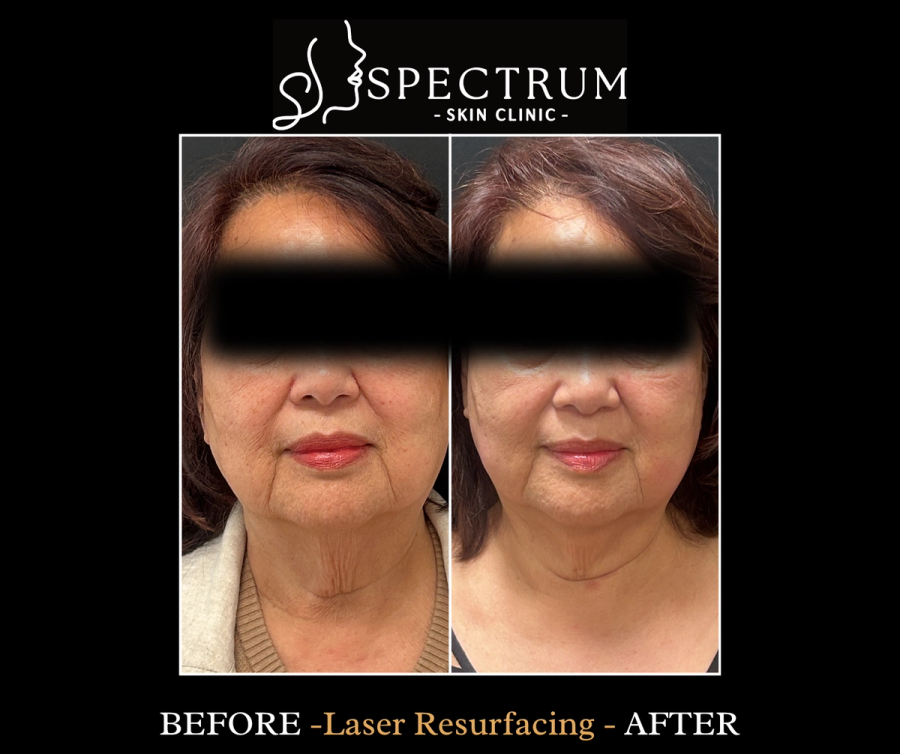
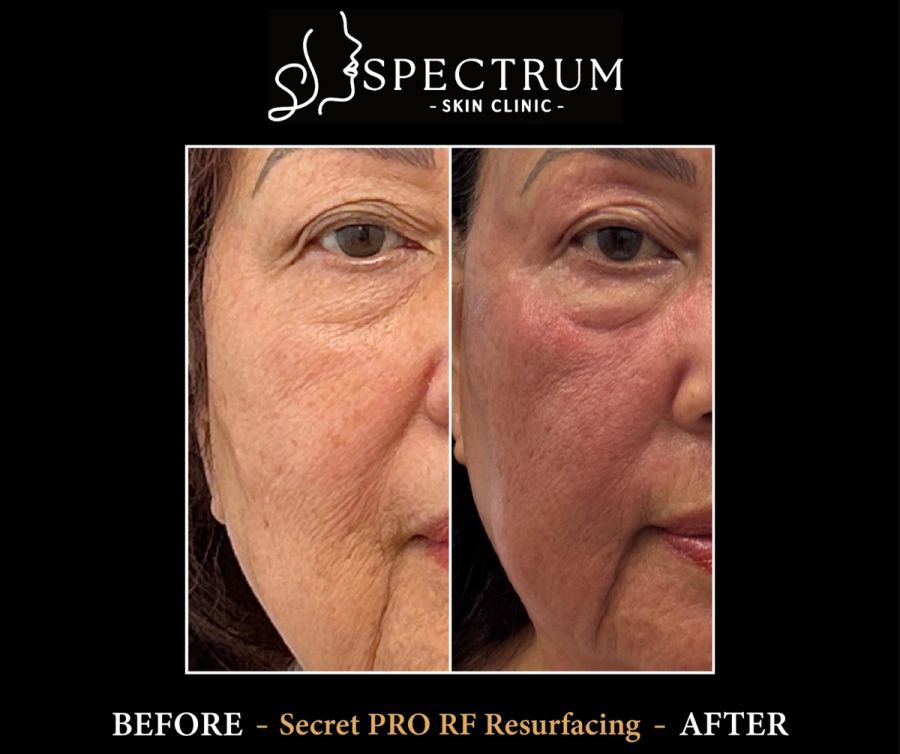
These cases were treated with different lasers and energy devices, not one procedure. Check the treatment named on each case, because the plan that produced a given result was matched to that skin and that finding.
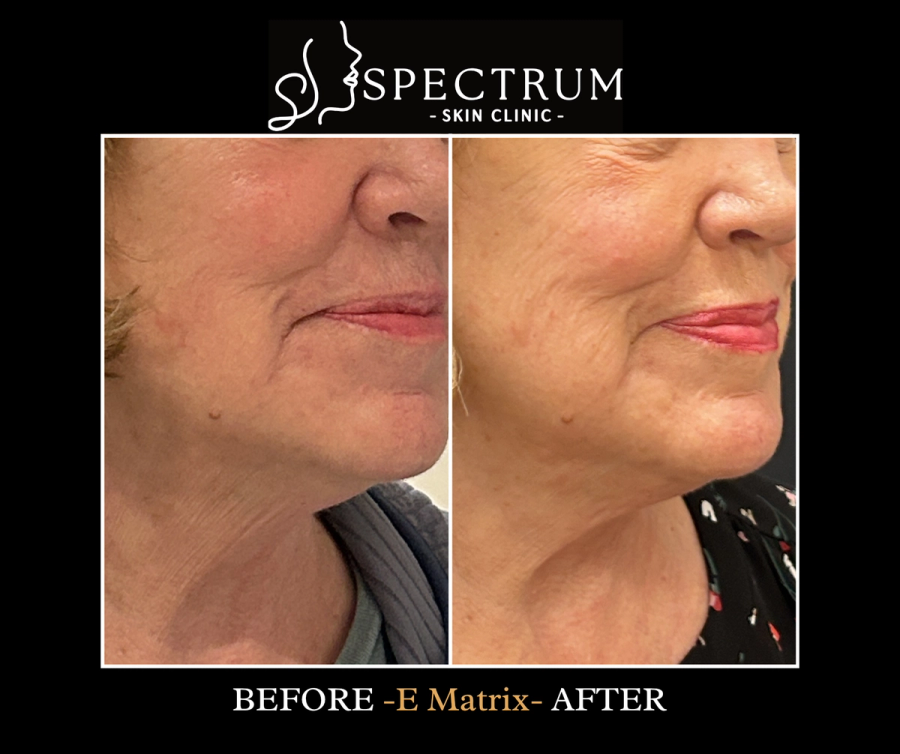
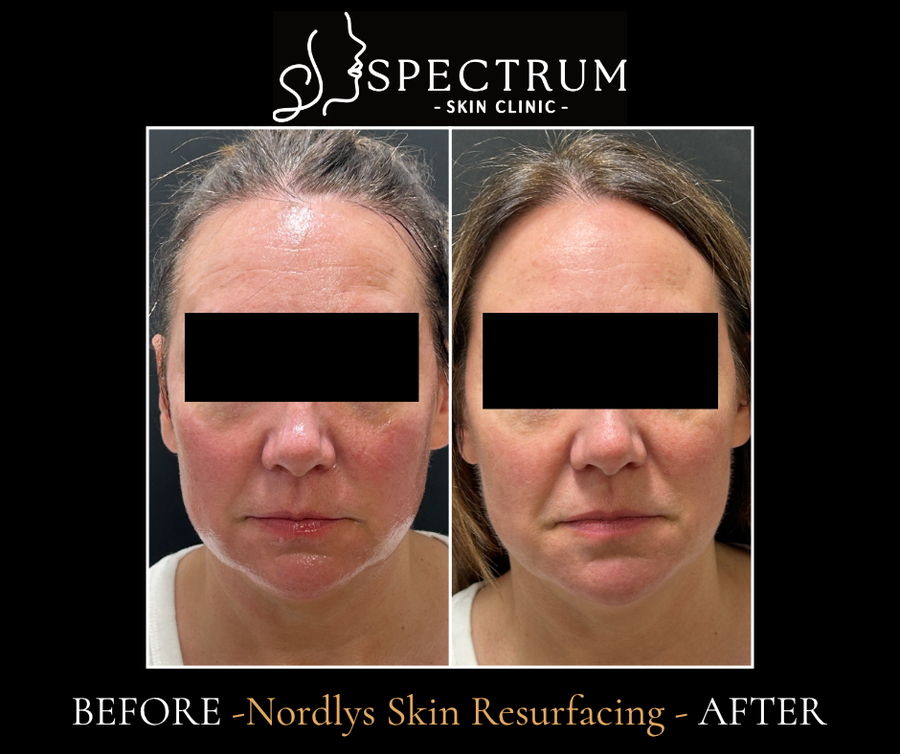
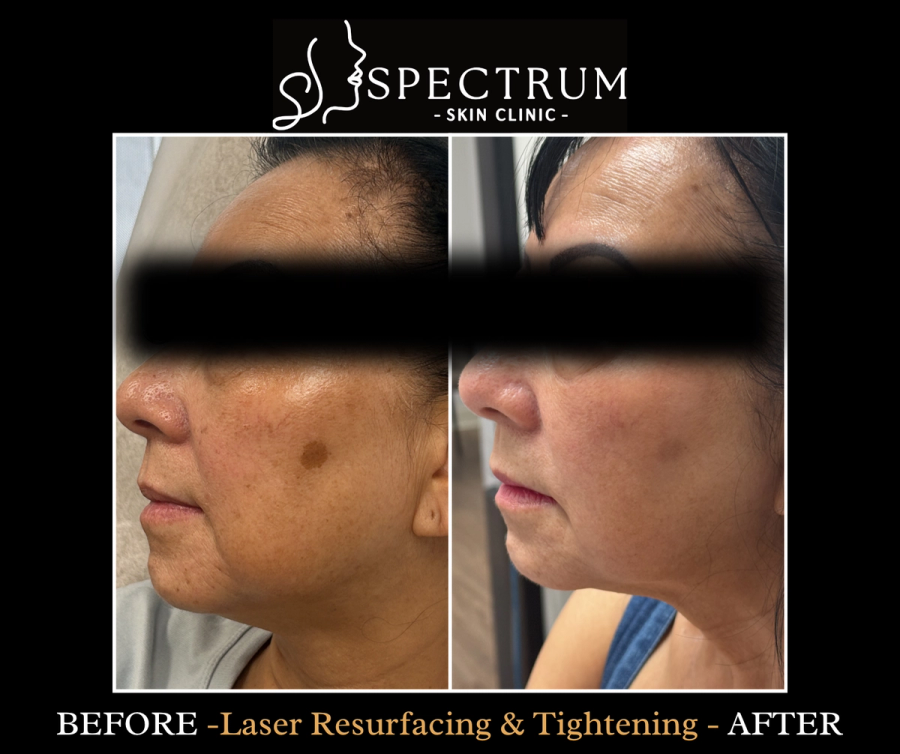
How Laser Skin Resurfacing Works
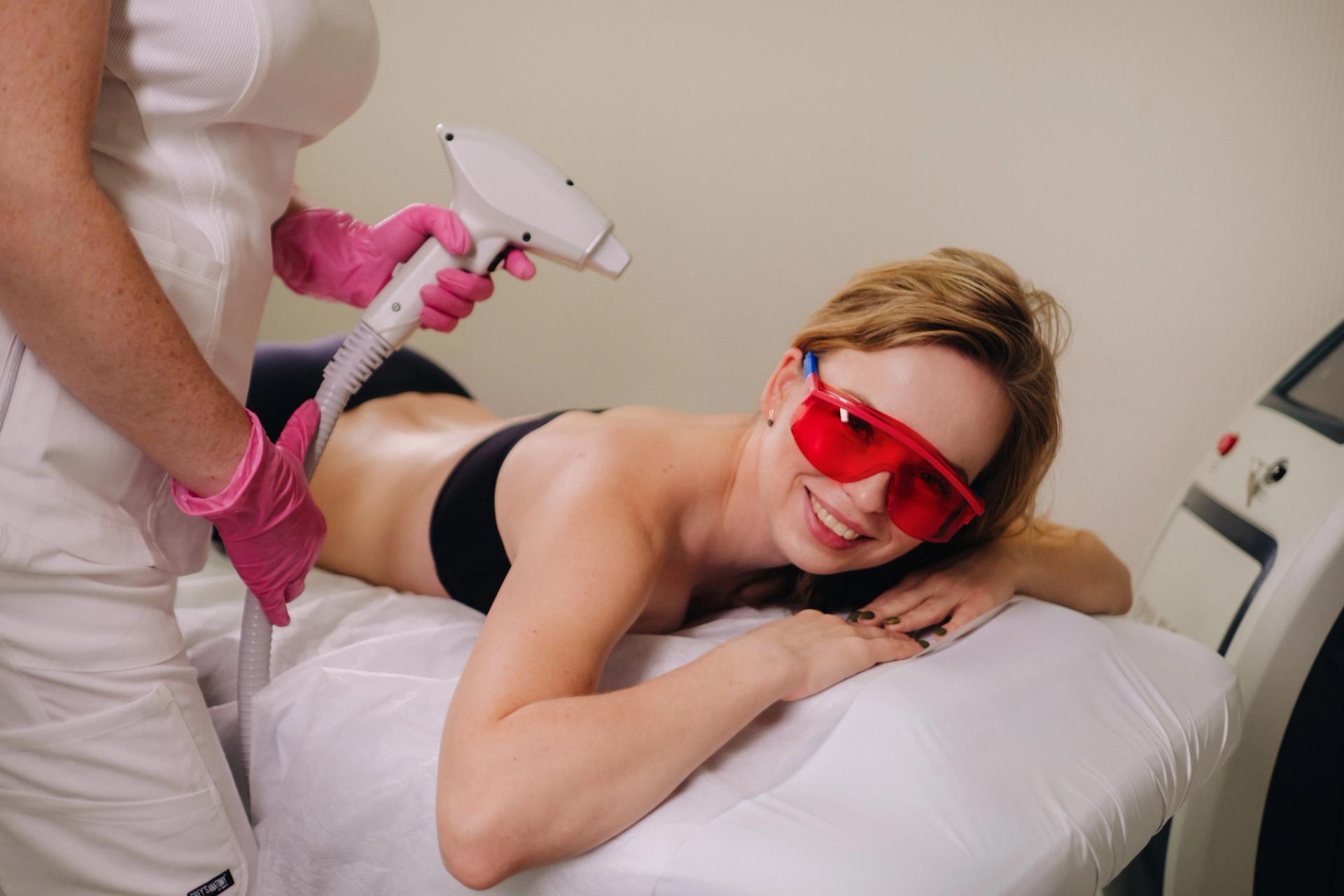
A resurfacing laser delivers energy that the skin absorbs as heat. Ablative wavelengths remove thin columns of the outer skin, and the surrounding untreated tissue speeds the repair. Non-ablative wavelengths heat the dermis underneath without breaking the surface, so the skin sheds less and recovers faster.
Most resurfacing today is fractional. The laser treats a fraction of the skin in a grid of microscopic columns and leaves the skin between them intact. That intact skin is what carries healing across the treated surface.
Radiofrequency and older laser platforms do related work by other means. Radiofrequency microneedling heats the deeper dermis through fine needles rather than with light, which is why it is often chosen for texture and laxity in darker skin. An Er:YAG laser is absorbed sharply by water, giving controlled surface work with a shorter recovery than a deeper ablative pass.
Which Wavelength, and Why
The Candela Nordlys platform combines intense pulsed light, a 1550 nm and a 1940 nm non-ablative fractional laser, and a 1064 nm Nd:YAG. The two non-ablative wavelengths do different work.
The 1550 nm laser is absorbed deeper in the dermis, which suits texture and scars. The 1940 nm laser is absorbed more superficially, which suits tone and fine surface texture. Its cleared uses include benign pigmented spots such as age spots, sunspots and freckles in lighter skin types.
Which wavelength fits depends on the depth and type of what the skin shows, and Dr. Munib decides that at the assessment.
Which resurfacing, for which finding
Which Laser for Which Finding
These are starting points, not fixed rules, and many plans combine two lasers across a short series. Patients often arrive naming a platform they have read about, Fraxel, eMatrix or SmoothBeam among them. Those are brand names for laser and energy devices, and the wavelength and the depth it reaches matter more than the name on the machine.
Combined approaches
Combined Approaches
Who May Be a Candidate
Candidacy turns on what the skin shows and on the skin type that has to heal afterward. A clear finding, texture, scars, pigment or early lines, and a realistic view of recovery make for a straightforward plan.
How Dr. Munib decides
She examines the skin at rest and names the finding first, then weighs the skin type and history before choosing a wavelength and depth. In selected patients a non-ablative wavelength is chosen over CO2 to keep recovery short; in others the depth of a scar makes the deeper trade worth it. That judgement is made in person, not from a preset protocol.
Often a good fit
Skin with texture, acne scars, sun-damaged tone or early lines, in a patient who can plan recovery around the depth chosen. Darker skin is treatable, and the wavelength and settings are selected with more care.
When resurfacing waits or is not the answer
Active skin infection, recent sun exposure, certain medications and a history of keloid scarring may delay or rule out resurfacing. Deep ablative settings are used cautiously in darker skin, where a non-ablative wavelength or radiofrequency is often chosen instead.
Recovery
What to Expect and Timeline
Recovery scales with the depth chosen, and the exact downtime is set with the wavelength at the consultation. Specific day counts are confirmed by Dr. Munib for the plan.
Risks
Documented Risks
Resurfacing risk scales with depth. The deeper the wavelength works, the more the skin can react afterward, which is why the setting is matched to the skin type.
Prolonged redness
Treated skin stays pink or red as it heals, and the deeper the pass, the longer this lasts. Sun protection and the aftercare routine shorten it.
Pigment change
Skin can darken or lighten after treatment, more often in darker skin at ablative settings. Screening the skin type first and choosing a gentler wavelength lowers the risk.
Scarring
Scarring is uncommon after resurfacing. Keeping the treated skin protected and attending follow-up visits reduces the risk.
Risks, alternatives and expected recovery are reviewed before treatment so the decision is an informed one.
Safety and skin tone
Skin tone sits at the center of safe resurfacing. In darker skin, ablative settings raise the risk of dark marks, so Dr. Munib screens the skin type before treating and often chooses a non-ablative wavelength or radiofrequency instead.
Every laser treatment at Spectrum is performed by Dr. Sabeen Munib, MD, from the assessment through the settings chosen on the day.
Aftercare and Recovery
Cost
What Affects Your Cost
Cost tracks the wavelength used, the size of the surface treated and the number of treatment sessions the plan calls for. A light non-ablative pass over the cheeks sits at one end, and staged ablative work across the full face sits at the other.
Dr. Munib sets the price at the consultation once the wavelength, depth and number of sessions are decided, so the figure reflects the actual plan.
New patients: 20% off your first treatment.
Pay monthly with

Setting expectations
What improvement should I expect?
Texture, tone and scarring are different findings, and one treatment does not always move all three by the same amount. Resurfacing softens and improves. It does not erase a scar or clear pigment outright.
Improvement builds as collagen reforms in the weeks after treatment rather than appearing the day the redness settles. Deeper findings usually need a short series, and the plan names how many treatment sessions are likely before the first pass.
Explore
Related Treatments
Fractional CO2 Laser
The deepest ablative option, for etched wrinkles and heavy sun damage in fair skin that can take the recovery.
Fotona Erbium Laser Resurfacing
Er:YAG resurfacing on the Fotona platform, absorbed sharply by water for controlled surface work with a shorter recovery than a deeper ablative pass.
Nordlys IPL
For redness, rosacea and surface pigment, where light aimed at the vessel or spot does what a fractional laser is not meant to.
Laser Genesis
Gentle refinement with no planned downtime, for tone and subtle texture between deeper treatments.
Secret PRO
Radiofrequency microneedling for texture and laxity, often chosen in darker skin where ablative settings carry more pigment risk.
Sublative Resurfacing
Fractionated radiofrequency for acne scars and texture, energy delivered through the surface rather than by a laser wavelength.
CO2 Laser Under Eyes
Focused CO2 resurfacing for the thin skin and fine lines under the eyes.
Non-Ablative Fractional Laser
The 1550 nm and 1940 nm non-ablative option on Nordlys, for texture, surface pigment and early lines when a week of recovery is not workable.
Patient reviews
What Patients Say
4.97★ across 441 verified Boulevard patient reviews.
P. C.
A. F.
L. G.
Questions
Frequently Asked Questions
Patients with texture, scarring, pigment, or early aging and realistic downtime expectations are typical candidates. Dr. Munib confirms skin type and history before choosing a laser.
Active infection, recent sun exposure, certain medications, and a keloid history may delay or rule it out. Deeper ablative settings are used cautiously in darker skin tones.
The visit starts with a skin assessment, then numbing, the laser pass, and detailed aftercare. A follow-up tracks healing and plans any further sessions.
Recovery varies with the treatment and your skin. Dr. Munib will explain what to expect and how to care for the treated area before you proceed.
Cost depends on the laser, the area, and the number of sessions. Dr. Munib gives transparent pricing at the consultation once the plan is set.
Yes. Resurfacing is often paired or staged with other lasers, microneedling, or injectables, and the plan depends on the concern and the skin.
How long improvement lasts varies with the treatment, your skin and ongoing sun exposure. Discuss expected results and maintenance with Dr. Munib.
Changes develop gradually after treatment. Dr. Munib will explain the expected course for the procedure recommended to you.
Dr. Munib operates all laser and energy devices, including Candela PicoWay, Fotona, Nordlys, Curas, Fraxis Duo, Secret PRO, HIFU and RF. Whether it is appropriate depends on your presentation, your history and an in-person evaluation with Dr. Sabeen Munib.
Clearance and clinical evidence are different things, and the difference matters here. The Nordlys 1550 nm and 1940 nm applicators hold FDA 510(k) clearance for skin resurfacing. The 1940 nm applicator is additionally cleared for benign pigmented lesions, including age spots, sunspots and freckles, in Fitzpatrick skin types I through IV. Clearance means the device may be marketed for those uses. It is not a study of outcomes. Candela, which builds the platform, documents that 1550 nm reaches deeper into the dermis than 1940 nm. Manufacturer material is not independent comparative research. Neither source predicts what one person's skin will do. Dr. Munib works from the finding in front of her and from how that skin has healed before.
Resurfacing works on the surface and on the collagen beneath it, so a finding outside that is not what it treats. It does not replace lost volume. Deep scars may soften rather than resolve, and how much they change depends on their depth. The 1940 nm clearance for benign pigmented lesions covers Fitzpatrick skin types I through IV, so pigment in deeper skin tones is assessed differently. Where another treatment suits the finding better, Dr. Munib says so, and refers out where that is the right step.